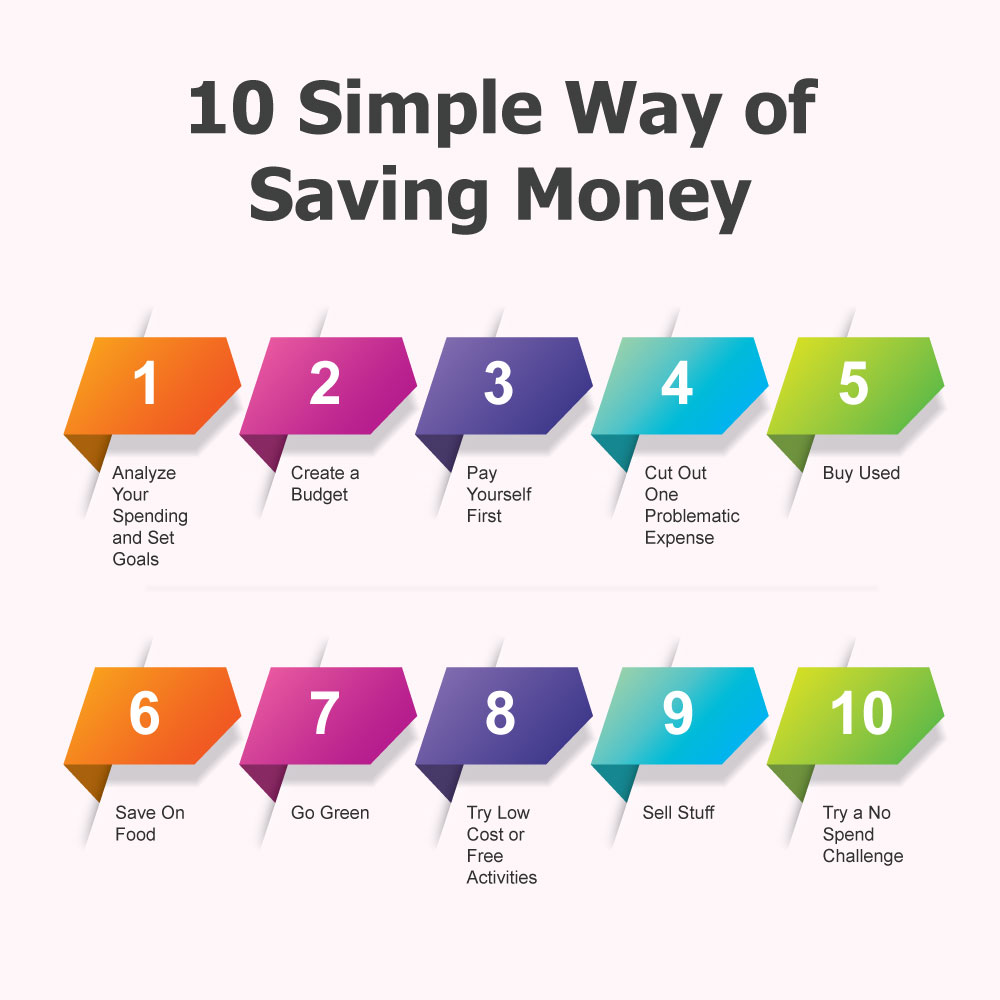
Ten Easy Ways to Cut Costs on Daily Expenses
Making significant lifestyle adjustments is not always necessary to save money. Small changes to how you purchase, dine, travel, and run your home can sometimes have a big impact over time.
Unbeknownst to us, daily expenses can quickly mount up. Even though a coffee bought on the way to work, an unused subscription, frequent takeout, or pointless store visits might not seem like much on their own, taken as a whole, they can have a substantial effect on a monthly budget.
The good news is that if you concentrate on easy behaviors that easily fit into your everyday routine, saving money can become lot easier.
Here are ten doable strategies to cut daily costs without complicating your life.
Check what you already have at home for a few minutes before you head to the grocery store or shop online. Next, list the things you actually need.
Make every effort to adhere to the list.
This does not preclude you from making an unexpected purchase. Simply said, the objective is to make deliberate purchases rather than letting every shopping excursion turn into a chance for impulsive purchases.
2. Examine Prices Before Purchasing
The cost of the same item might change significantly between retailers and online retailers.
Take a moment to evaluate prices before making a purchase, especially for more costly home items. When purchasing online, compare prices from multiple retailers and consider delivery costs.
Instead of just comparing package pricing, you may also compare the cost by kilogram, liter, or unit.
For instance, a larger package isn’t always less expensive. Determining whether choice truly offers greater value is made simpler by looking at the unit price.
Although it’s a little habit, comparing prices can assist avoid needless overspending.
3. Cook More Frequently at Home
Frequent meal orders or dining out might add up to a substantial monthly bill.
Making complex meals every day is not a requirement of cooking at home. Easy meals prepared with inexpensive materials can be enjoyable, practical, and far less costly than regular takeout.
Cooking can also be made simpler by preparing a few meals ahead of time.
For example, you might prepare a large pot of soup, rice, pasta, vegetables, or another family meal and use the leftovers for lunch the following day.
The idea is not to completely eliminate restaurants or takeout. Instead, reducing the frequency can leave more room in your budget for other priorities.
4. Review Your Subscriptions
Monthly subscriptions are easy to forget because the payments are often automatic.
Streaming services, apps, memberships, cloud storage, magazines, and other subscriptions can continue charging your account even when you rarely use them.
Take some time to review your recurring payments.
Ask yourself:
Do I frequently utilize this service?
Do I still require it?
Is there a less costly choice?
Do I have to pay for several services that offer comparable advantages?
You can lower your monthly costs without significantly altering your daily schedule by canceling even one or two subscriptions that you no longer utilize.
5. Cut Down on Food Waste
Food that is thrown away represents money that has already been spent.
Organizing your cupboard and refrigerator to make older items easier to see and use first is an easy method to cut waste.
Before buying groceries, check what you already have; you might discover ingredients that can be combined to make a meal, saving you from purchasing extra food.
Proper food storage is another beneficial habit; certain fruits and vegetables last longer when kept under the right conditions, and leftovers can often be stored in the refrigerator or freezer for later use.
Additionally, planning meals based on the ingredients you already have can make your shopping more efficient.
6. Consuming energy more carefully
Household energy costs can rise significantly over time.
Simple habits—such as turning off lights when leaving a room, unplugging unused appliances, and using household appliances correctly—can help reduce unnecessary energy consumption.
You can also pay attention to heating and cooling habits. Keeping doors and windows properly closed when heating or cooling a room can prevent energy from being wasted.
When replacing appliances, energy efficiency can also be worth considering. Although an efficient appliance may sometimes cost more initially, lower operating costs can make a difference over its useful life.
The important point is to avoid wasting energy unnecessarily.
7. Take Better Care of the Things You Already Own
Replacing household items frequently can become expensive.
Clothing, shoes, kitchen equipment, furniture, electronics, and other belongings often last longer when they are properly maintained.
For example, following washing instructions can help clothing maintain its appearance. Cleaning appliances regularly can help them work properly, while storing tools and household items correctly can reduce unnecessary damage.
Before replacing something that is not working perfectly, consider whether it can be cleaned, repaired, adjusted, or maintained.
Taking care of your belongings can reduce the number of replacements you need to make.
8. Wait Before Making Non-Essential Purchases
Impulse purchases are one of the easiest ways to spend more than planned.
When you see something you like, especially online, consider waiting before buying it.
For small purchases, waiting until the next day may be enough. For more expensive items, you might give yourself several days to decide.
During that time, ask yourself whether you genuinely need the item or simply want it because it caught your attention.
Sometimes the desire to purchase something disappears after a little time.
This simple waiting habit can help you distinguish between purchases that are useful and purchases that are driven by a temporary impulse.
9. Plan Your Errands
Making several separate trips for small errands can increase transportation costs and encourage additional spending.
Instead, try grouping errands together whenever possible.
For example, if you need groceries, household supplies, and another item from a nearby store, planning the trips together can save time and reduce unnecessary travel.
Planning your route can also make errands more efficient.
The same idea applies to online shopping. Instead of placing many small orders throughout the week, consider whether several necessary purchases can be combined.
Better planning does not require much effort, but it can reduce both time and everyday expenses.
10. Set a Simple Weekly Spending Limit
You do not need a complicated financial system to become more aware of your spending.
A simple weekly limit for flexible expenses can make it easier to understand where your money is going.
For example, you could decide how much you want to spend each week on restaurants, entertainment, snacks, shopping, and other non-essential purchases.
The goal is not to make every purchase stressful. Instead, a simple limit gives you a reference point.
At the end of each week, take a few minutes to look at what you spent. You may notice patterns that were difficult to see before.
Once you know where your money is going, it becomes easier to decide where you want to make changes.
Small Changes Can Add Up
Saving money does not have to mean giving up everything you enjoy.
In many cases, the biggest improvements come from small habits repeated consistently. Making a shopping list, cooking at home more often, checking subscriptions, reducing food waste, comparing prices, and taking better care of your belongings can all help reduce unnecessary expenses.
You do not need to adopt every habit at once.
Start with one or two changes that feel realistic for your lifestyle. Once they become part of your routine, you can gradually add others.
The most important step is becoming more aware of everyday spending. When you pay attention to where your money goes, you have more opportunities to make intentional choices and avoid expenses that do not provide much value.
Over time, these small decisions can make everyday spending more manageable and help create healthier financial habits.